
Innovation in surface drill and blast operations is delivering measurable improvements in environmental performance, operational efficiency, community impact, and personnel safety.
by Jonathan Rowland
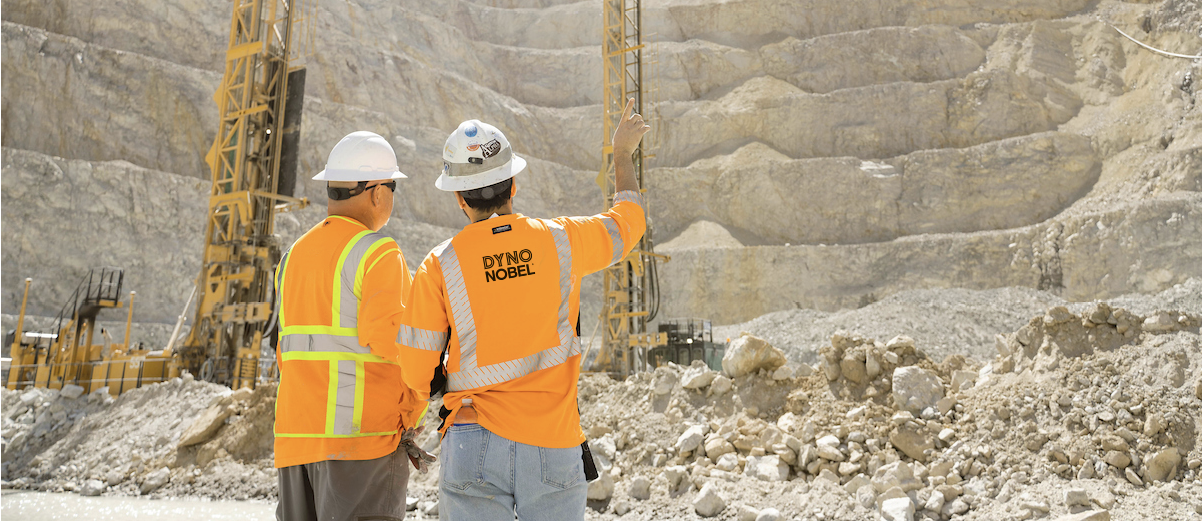
Photo: Dyno Nobel
As the mining industry intensifies its focus on sustainability, surface drill and blast practices are undergoing a shift. Once viewed primarily through the lens of productivity and cost-efficiency, innovation is helping to reimagine these operations as significant levers for reducing environmental impact, enhancing safety, and supporting long-term operational resilience. North American Mining asked several leading suppliers of drilling equipment and blasting solutions how they were supporting this evolution.
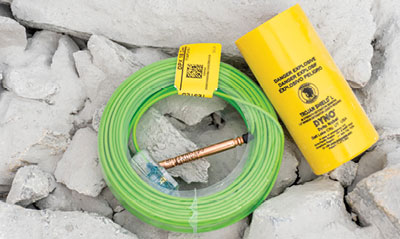
DYNO NOBEL: THE POWER OF PRECISION
Blasting presents an excellent opportunity to develop more environmentally friendly practices, Mike Kotraba, Dyno Nobel’s general manager of Advanced Solutions, told North American Mining, noting that the success of sustainability initiatives in surface mining is reliant on the ability to execute blast plans as designed. “Explosive products designed for precision and accuracy enable operations to fine-tune their blasting practices, minimizing environmental impacts,” he explained.
According to Kotraba, the company’s DIFFERENTIAL ENERGY technology was developed with that precision in mind: “By varying the density of TITAN bulk emulsion throughout the borehole, it ensures each rock segment receives the explosive energy needed for optimal fragmentation. Meanwhile, our Delta E2 preload software utilizes data from drills, alongside other sources that characterize rock properties, to target the ideal placement of energy. Blast plans are then sent directly to the loading equipment to ensure each hole is loaded as designed.”
By placing the energy exactly where it is needed, it is “easier to minimize flyrock and NOx emissions,” continued the Dyno Nobel expert. “In addition, because TITAN bulk emulsion is viscous, it tends to stay in the hole rather than migrating into cracks and voids; it also minimizes groundwater contamination by displacing the water in the borehole, so dewatering is not required.”
In one example, a gold mine in Australia switched from an ammonium nitrate/emulsion blend to TITAN bulk emulsion and DIFFERENTIAL ENERGY technology. “They reduced their greenhouse gas emissions by 7%, improved truck fill factors by 13%, and eliminated post-blast NOx emissions,” said Kotraba.
Electronic detonators are another innovation that provides the precision necessary for sustainability in mining. “By enabling millisecond timing accuracy, they offer unmatched flexibility in any environment,” Kotraba explained. “Meanwhile, their precision provides operations with greater control over fragmentation and vibration, thereby reducing the negative environmental impacts and effects on nearby communities.”
Sustainability From Drill to Mill and Seam to Stone
Kotraba also highlighted the company’s Drill to Mill and Seam to Stone processes, which focus on adjusting drill-and-blast practices to improve outcomes that cascade throughout the entire value stream. These processes rely on the DynoConsult team of drill-and-blast experts, who partner with operations to baseline current practices, establish best practices, identify areas for improvement, implement changes, and sustain results in the long term. “As optimized material moves downstream through the remaining mining processes and processing circuit, it is not just monetary value that compounds; sustainability benefits compound as well,” explained Kotraba, with the impact felt in both load-and-haul operations and downstream to the mill.
For example, precise energy placement, millisecond timing accuracy, and well-crafted blast designs optimize fragmentation, resulting in:
- Improved excavator and truck fill factors;
- Shorter loading times, allowing for the movement of more tons per shift;
- Lower carbon emissions from heavy equipment as they become more efficient; and
- Reduced wear and tear on equipment, increasing its longevity and reducing the carbon footprint associated with equipment manufacturing.
Meanwhile, at the crusher and the mill, optimized rock fragmentation enables improved throughput and reduced power requirements. The lifespan of wear items such as mantles and liners is also extended.
The Drill to Mill and Seam to Stone processes “illustrate what is possible when operations combine the right products with the right blast design and execute it with precision,” concluded Kotraba. “The sustainability benefits reach beyond the bench to compound throughout the entire value chain.”
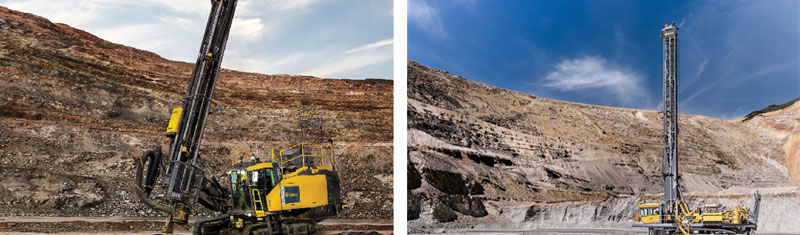
EPIROC: AUTOMATING AND ELECTRIFYING DRILL RIGS
Two items high on Epiroc’s agenda are minimizing environmental impact, which encompasses decarbonization and electrification solutions, and enhancing operational safety by removing humans from hazardous situations through automation. “By 2030, we have committed to halving absolute CO₂ emissions across our operations, transport, and from customers’ use of our products,” said Matthew Inge, Business Line Manager – Surface Drills, Automation & Digital. “We are committed to offering a full range of emission-free products, while striving to tackle social, operational, and environmental challenges and significantly reducing work-related injuries.”
For example, the company’s Live Work Elimination (LWE) product portfolio integrates technology, change management, and safety culture to prevent operators from being exposed to harm. “It focuses on extending equipment lifespan to reduce maintenance risks, utilizing remote diagnostics to minimize onsite intervention, and advancing automation and equipment design to enable remote task execution in hazardous environments,” explained Inge.
To support a cleaner environment, Epiroc is advancing its shift toward electrification with innovative battery-electric drilling solutions, said Ron Hankins, Business Line Manager – Surface & Exploration Drilling Equipment, who pointed to the SmartROC D65 battery-electric rig as a “significant step toward zero-emission drilling, replacing traditional diesel engines with electric powertrains to eliminate direct CO₂ emissions, reduce noise pollution, and improve energy efficiency.” According to Hankins, electric motors also offer better torque control, lower maintenance needs, and less downtime. At the same time, the rig’s simplified hydraulic system uses 80 fewer gallons of oil while reducing the risk of leaks and contamination.
As mining equipment becomes more battery and electric-driven, “automation is also revolutionizing operations by enhancing safety, efficiency, and precision,” added Hankins. “Autonomous rigs, such as the SmartROC D65, operate without an onboard operator. Monitored remotely from a centralized control center, they enable 24/7 operation while keeping personnel out of hazardous environments. They can perform tasks such as tramming, handling drill rods, and drilling blast holes entirely independently, with GPS integration ensuring consistent drilling, improving fragmentation, and reducing the need for secondary blasting.”
Similarly, the electric-driven Pit Viper 271 XC E marks “another milestone in Epiroc’s electrification journey,” said Hankins. “By eliminating fuel consumption and exhaust emissions, it significantly reduces the environmental impact of drilling operations, while advanced automation allows similar remote operation as the SmartROC D65, improving operational safety and efficiency.” Operational gains include a 34% increase in drilling capacity and the ability for one operator to oversee multiple rigs. Additionally, “by eliminating human variability, the system maintains consistent performance, resulting in higher productivity and more reliable results.” The full Pit Viper lineup is now available in electric versions.
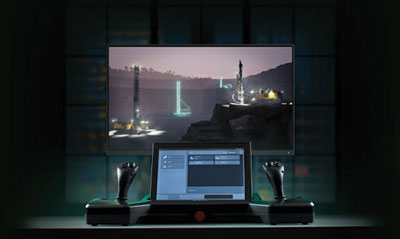
Sitting alongside autonomous rigs, the company’s Common Automation Panel is a single ergonomic station that enables remote control of multiple surface rigs. “Designed for safety, efficiency, and operator comfort, CAP supports mixed-fleet operations with seamless rig switching, scalable architecture, and standardized components that reduce training, maintenance, and spare-parts costs,” Inge explained. “Its intuitive touchscreen and joystick interface improve usability, while centralized control enhances situational awareness, operator well-being, and alignment with ESG goals.”
By integrating emission-free equipment, remote and autonomous operations, and advanced safety systems, Epiroc is “significantly reducing the environmental and human impact of drilling and blasting,” concluded the two experts, “demonstrating how purposeful innovation can drive meaningful progress toward a safer, more sustainable mining industry.”
ORICA: INNOVATING FOR IMPACT
Orica is combining chemistry, digital tools, and real-world mining expertise to minimize the impact of drilling and blasting while enhancing field results, focusing on technological innovation. “It is not just about breaking rock anymore; it is about how that rock is broken, what happens next, and what impact is left behind,” explained Adam Aubin, principal manager at Orica Technical Solutions North America. This philosophy is evident in several recent innovations.
According to Aubin, the company’s 4D bulk system enables real-time energy customization, allowing operators to match explosive energy to specific geological conditions. This precision enhances fragmentation and wall control while reducing overall explosives consumption by optimizing energy use in each blast hole. “The result is lower environmental impact – less vibration, fume, and nitrate leaching – and improved cost efficiency, making it an intelligent and sustainable solution for modern surface mining,” Aubin concluded.
Another example is Fortis Protect, a bulk explosive engineered to address the environmental concerns over nitrate leaching that have recently gained attention across surface mining operations. “Nitrates can wash out of waste dumps over time, leaching into surrounding soil and water,” explained Aubin. “Fortis Protect is designed to minimize this risk right from the start, with a formulation that limits nitrate loss during and after the blast. Our approach also includes a broader nitrate management framework. This three-step strategy begins by mapping how nitrates behave on a mine site, comparing current practices to industry best practices, and recommending changes to reduce environmental exposure. It is a methodical, data-backed approach to solving a problem many mines know they have but are not always sure how to fix.”
A final product innovation is the company’s WebGen wireless initiating system, which gives operations the flexibility to maintain sleeping shots by firing on demand, ensuring minimal disruptions to nearby environments. “The secret lies in the absence of wires or signal tubes on the surface, ensuring the product is secure in the blasthole once loaded,” explained Aubin. “WebGen thus enables a reduction in the number of blasting events by merging multiple blasts and firing in one event. Meanwhile, flyrock and dust can be controlled by providing an extra layer of material, such as clay, steel, or rubber mesh, as an additional mitigation measure. Irrigation by water trucks can also help suppress dust.”
Digital tools bring precision and accountability
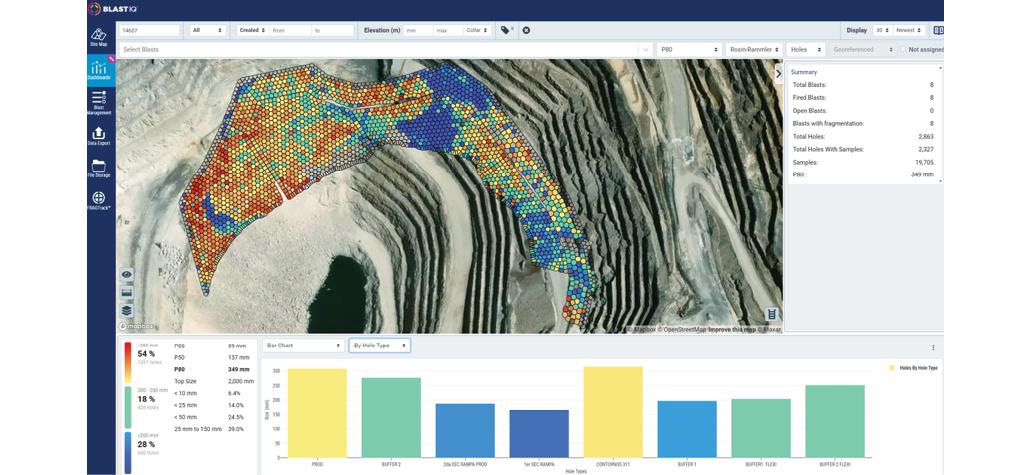
Orica Digital Solutions’ BlastIQ integrated solutions provide “quality control throughout the drill and blast process, delivering cost savings and superior blast outcomes,” David Reyes, senior manager, Orica Americas, told North American Mining. “These applications allow customers to design blasts to match performance objectives and present insights to enable continuous blast optimization.” Seamlessly integrated applications include:
- SHOTPlus blast design and modeling software. “Featuring charging and initiation design tools, superior visualization, and blast analysis functionality, the application also facilitates compliance, improves productivity, and reduces the overall cost of drill and blast operations,” said Reyes.
- BlastIQ Mobile, which allows remote access to blast designs and hole conditions, integrating the engineering office with the bench.
- BlastIQ Insights for tracking of key performance indicators and comprehensive digitized library storage per blast.
Reyes also highlighted the company’s vibration and airblast automated monitoring solution. “ENVIROTrack can natively integrate with BlastIQ, SHOTPlus, and our environmental modeling tools to provide an end-to-end vibration management ecosystem,” said the senior manager. “Data is also made available through our cloud-hosted API for customer use in their own third-party systems.”
Finally, on the digital side, Orica Digital Solutions’ FRAGTrack machine vision systems automatically capture and analyze near real-time fragmentation data to help engineers fine-tune their blast designs. “Better fragmentation means smoother processing, less wear on crushers, and more energy-efficient operations overall, as we reduce energy intensity by enabling an increase of processed tons with the same amount of diesel, electricity, and water,” explained Reyes.
Recycling waste oil into an emulsion
Aubin concluded with a mention of the company’s Cyclo solution, which reuses one of the mine’s most overlooked waste streams: used oil. “Instead of being treated as a disposal problem, Cyclo recycles used oil, after it has been properly treated, to be incorporated into emulsion production for bulk explosives,” he explained. “Mines cut waste and disposal costs while also reducing reliance on raw materials for explosive manufacturing.”